Methods and analysis
SAR Polarization: Interpreting VV, VH, HH and HV
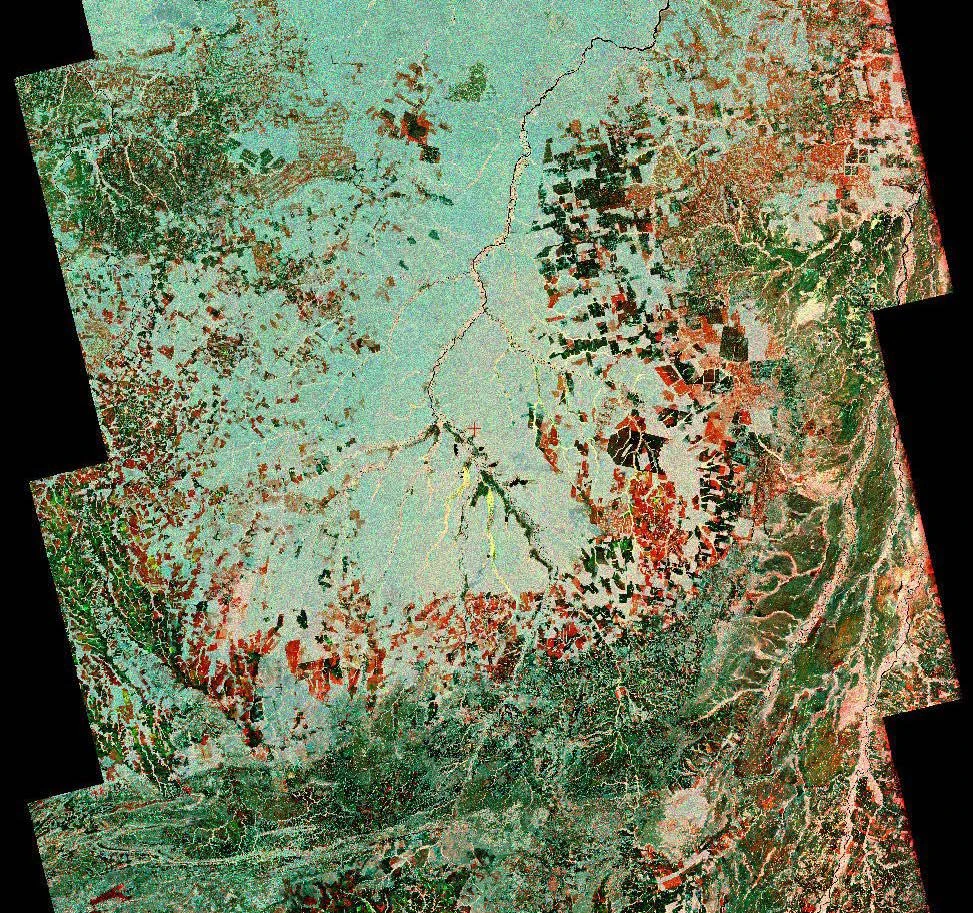
Polarization describes the transmitted and received electric-field orientation.
6 min readRead article ↗
THE ITSENSING JOURNAL
Practical satellite reviews, remote sensing methods and GIS workflows. Explore the science, understand the limits, and take your next project into iT Sensing.
Polarization describes the transmitted and received electric-field orientation.
Radar incidence angle influences the observed scattering and the ground footprint.
Smooth open water often produces low backscatter in suitable radar geometry, making intensity useful for flood screening.
A SAR intensity ratio compares calibrated power between observations.
Coherence measures the consistency of complex radar observations over a local estimation support.
InSAR uses phase differences to estimate motion projected along the radar line of sight under a processing model.
Temporal SAR statistics summarize scattering variability across acquisitions.
Radar wavelength affects scattering interactions with vegetation structure and surface roughness.
Texture features describe spatial patterns in radar intensity rather than a new physical band.
Optical reflectance and radar scattering observe different interactions with the surface.
Brightness temperature is derived from measured radiance under a blackbody-equivalent convention.
The Landsat Collection 2 Level-2 surface-temperature encoding uses a documented conversion to Kelvin.
No matching articles. Try a different search.